
Norfolk City Deed Records Include More Than Sales
The Land Records Division of Norfolk Circuit Court records conveyances. It also records a whole family of related instruments. Some filings pass title. Others create or release a security interest, reserve an easement, or map a parcel's legal description. The instrument's name carries real weight. Norfolk's assessor also screens several non-market transfers out of its sales modeling. So a recorded consideration amount alone never makes a transfer a comparable sale.
| Deed Type | What It Does | Common Use |
|---|---|---|
| Deed | Conveys an interest in real property | Sale or other transfer |
| Deed of trust or mortgage | Secures an obligation against land | Loan security, not a sale |
| Certificate of satisfaction | Releases a recorded security instrument | Confirming a paid obligation |
| Special commissioner deed | Records a court-directed conveyance | Estate, partition, or court matter |
| Plat or easement | Shows lots or grants a defined use right | Subdivision or access context |
A deed of trust, for instance, does not hand ownership to the lender. It secures a debt. A release or certificate of satisfaction later shows the debt was cleared. That clearance appears in the land records. Norfolk filings also include plats, certain liens, judgments, financing statements, homestead exemptions, and miscellaneous instruments. A careful title review sorts each document by its legal effect. It does not read every recorded page as a sale.
Norfolk Land Records Bridge 1784 and 1682
Norfolk's remote inventory publishes deed and land records beginning in 1784. The clerk separately reports that its image-import project reaches back to 1682. Those are two different promises. An imported image and an indexed, searchable entry are not the same thing. Confirm which book, name index, or image exists for the year in question before trusting an early result. Norfolk's deed history runs deep. Online coverage simply has to be checked record by record.
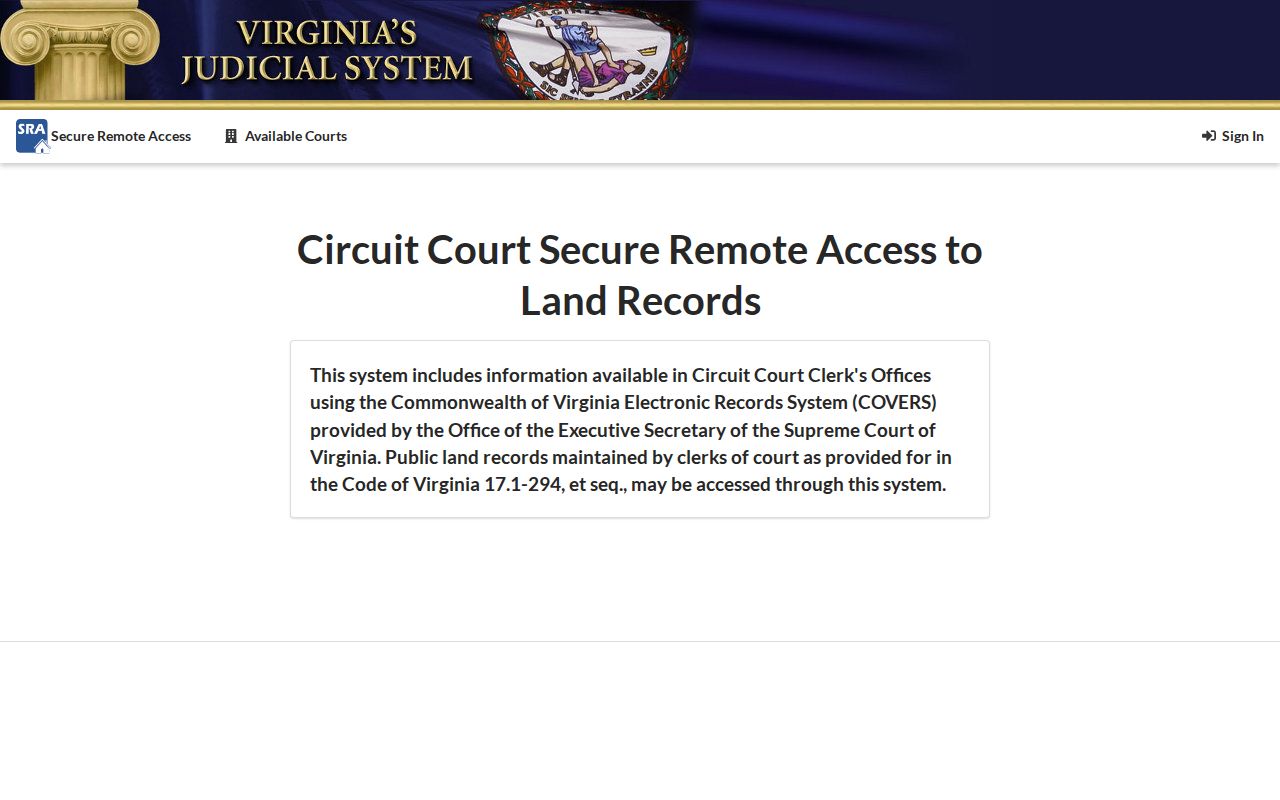
Virginia COVERS/SRA is the remote service for Norfolk land-record images. The Clerk offers a $600 annual or $50 monthly subscription. It covers deeds and land records, financing statements, general miscellaneous filings, judgments, marriage licenses, and wills and fiduciaries. That remote-access charge sits apart from recording taxes and copy costs. Courthouse public terminals and a copy center are alternatives, and index-only access may be free where enabled. Norfolk does emphasize the subscription route. A searcher chasing the earliest chain can also ask about Library of Virginia microfilm or original-record guides. Keep the exact name spelling and deed reference from every image. One spelling change can break the index trail.
The remote inventory lists different start dates for different series. Land books begin in 1881. Wills and fiduciaries start in 1894. Civil and chancery files start in 1833. Judgments begin on January 11, 1990. Financing statements begin on March 1, 1993. These are category-specific inventory dates, not a guarantee that every document is indexed or viewable online. A lien review may span the judgment and financing-statement indexes as well as the deed chain. Match each release or satisfaction to its original filing. For a legal title conclusion or a lien-priority question, the Clerk's search tools are discovery aids and a title professional may be needed. The Virginia COVERS/SRA entry is the remote land-record route.
For years older than the published index start, confirm both the image and the index path with the clerk. That single question prevents a dead-end search.
Norfolk's Deed Index Uses Party and Date Clues
The clerk's remote search form is dynamic. Its exact labels and choice lists shift from session to session. The workflow itself is a name-based record index. Date, book/page, and document-type controls are expected in the system. Only the search dimensions published in the official instructions are certain. A courthouse terminal remains the fallback whenever a browser view behaves differently.
| Index clue | How it narrows the search | What remains unverified |
|---|---|---|
| Grantor or grantee name | Find a conveyance or later transfer by party | Exact field labels and partial-match rules |
| Date range | Limit instruments to a chain period | Control options and date-entry format |
| Book and page or instrument | Open a known recorded reference | Exact identifier controls in the dynamic form |
| Document type | Separate deed from lien, plat, or release | Exact dropdown list |
Norfolk Documents Received by 3:30 Record That Day
Documents received by 3:30 p.m. are recorded that same day, according to Norfolk's clerk. Later submissions roll to the next business day. A recordable document must be an original or a certified court copy. It must be signed and properly notarized. It must also carry the Virginia Land Record barcode cover sheet. A return envelope is required when the submitter will not pick it up. Noncompliant papers can come back with an extra $5 mail-handling and processing charge.
The clerk page lists state recording tax at $0.25 per $100. It lists local recording tax at $0.085 per $100, subject to statutory exemptions. A $5 fee applies to paper-recorded documents. A $1 fee also applies on every deed under the cited open-space easement provision. Fees and exemptions vary by instrument. Check the current clerk schedule before filing. CSC eRecording Solutions and Simplifile are the named electronic providers. Their contact details are on the Clerk's instructions.
The Clerk identifies CSC eRecording Solutions at 866-652-0111 and Simplifile at 800-460-5657 for electronic submissions. Verify provider contacts and eligibility in the Clerk's current instructions before choosing an e-recording route. These are submission services only. They do not replace the public land-record index. A confirmed recording still has to be matched to the right parcel by legal description and instrument reference.
VADeed Alert Warns After a Norfolk Recording
VADeed Alert is a free email notice service covering Norfolk land records. It watches for a matching name or property ID. The catch is timing. A notice arrives only after a matching document is already recorded. It cannot block a transfer or prevent deed fraud. Think of it as an early warning bell. If an alert surprises you, pull the instrument in the clerk's official index and save the recording reference. Call the clerk or your counsel about the next move.
Enrollment accepts names and parcel identifiers. A business or estate name works too when that is the recorded grantee. Expect imperfection. A false match can happen, and a name variation can slip through. Periodic review of your own property records still matters. Norfolk adds a wrinkle here. AIR and the deed index are separate systems. The roll helps you locate a parcel while the recorded instrument remains the legal event worth inspecting. To set a notice, use the VADeed Alert signup page.
Keep the alert message, then confirm every concerning result in the land-record image.
Norfolk's Grantor-Grantee Index Follows Names
A grantor conveys or grants an interest. A grantee receives it. Norfolk's clerk searches the land-record index by customer name, not by street address. The address step belongs in AIR. It also sits with the Real Estate Division at City Hall. Once you have a likely owner of record, run the name both ways. Search it as a grantee to find the acquisition. Then search it as a grantor to catch any later transfer. Along the way, record every book, page, instrument date, and parcel description you cite.
- Identify the current roll owner through AIR or an address search at the City Real Estate Division.
- In COVERS/SRA, search the party name as grantee to locate an acquisition and as grantor for later transfers.
- Compare instrument dates, the legal description, and book or page references before treating a result as the same parcel.
- For a period outside the online index, ask the clerk or Library of Virginia about books and microfilm.
- Grantor
- The person or entity that conveys an interest.
- Grantee
- The person or entity receiving an interest.
- Chain of title
- The linked sequence of recorded conveyances for the parcel.
- Book and page
- A volume and page reference used to find a recorded instrument.
Older Norfolk Deeds May Use Another Place Name
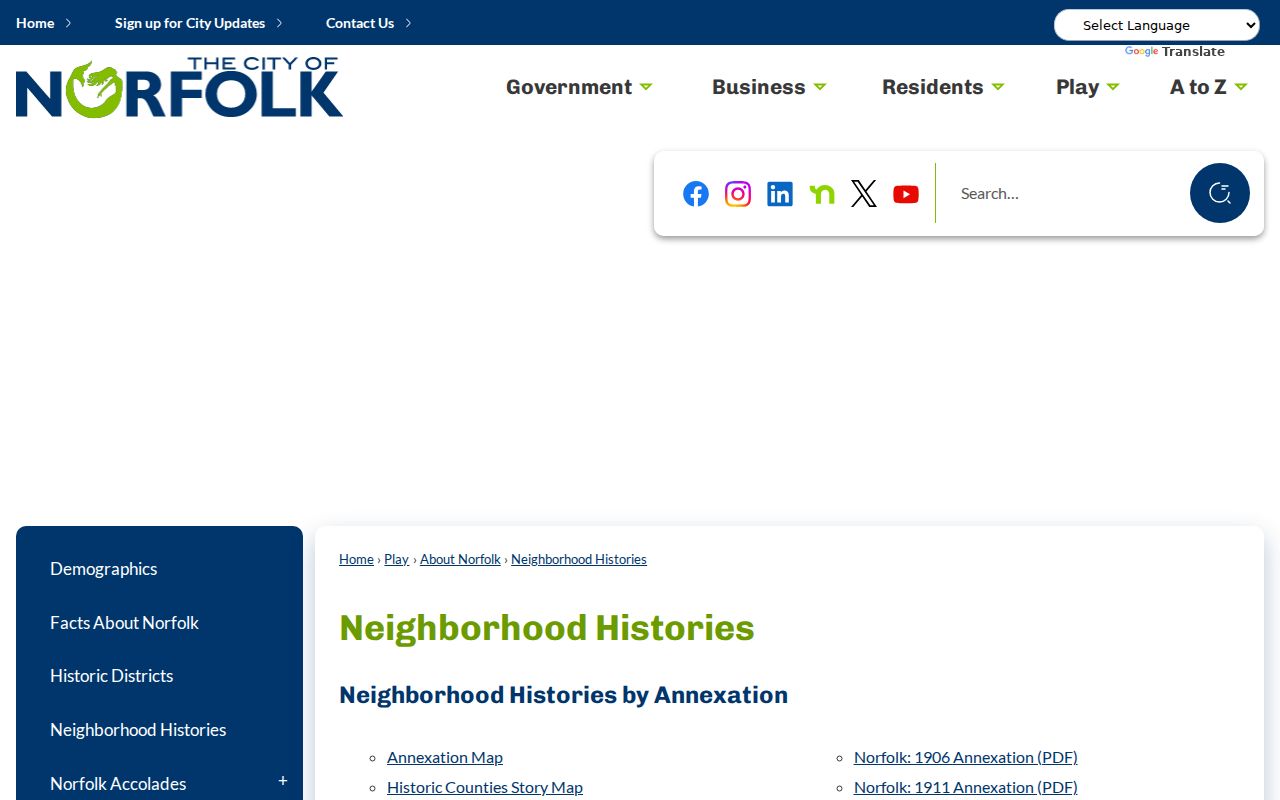
Historic Norfolk land instruments sometimes name a place or street that a current address search will never find. Annexation maps trace the story: Norfolk before 1845, then expansions in 1890, 1902, 1906, 1911, 1923, 1955, and 1959, and an acquisition in 1988. A parcel sitting inside Norfolk City today may have been described under Norfolk County or Princess Anne County in an older deed. Treat those former locality names as search clues. Then verify the description against a plat.
Street aliases open another door into an older index. Hampton Boulevard was once Atlantic Boulevard. The 1890 Atlantic City expansion brought the Norfolk Company's 250-acre subdivision and the Mowbray Arch development. Colonial names tied to the Jamestown Exposition period fill the 1902 street scheme. Terms like these help you pin down a subdivision or lot reference, though they never replace a chain-of-title check. For map context, Norfolk's annexation history collection is the place to start.
Search the historic place name beside the present address, then compare the legal lot description.
Getting a Norfolk City Deed Copy
The clerk's deed page explains recording and image services. It will not run a title search for you. Norfolk lists remote land-record access at $600 per year or $50 per month for covered categories, with a public terminal at the courthouse and the copy center as alternatives. Copy and certification charges vary by instrument and fee schedule. Check the clerk's instructions before sending any money or paperwork.
Recorded, not guaranteed. An image confirms that an instrument was recorded; it does not certify clear title or resolve later liens, releases, or competing claims. A full title search requires the relevant indexes and professional review.